The Cloudpepper alternative built by ex-Odoo engineers
Both platforms run Odoo on a server you own. The difference is how much of that server they take, and who is watching it once it's running.
One-line install · We never hold your server keys · Monitored, with automatic recovery · Support seven days a week · ISO 27001 certified · Odoo Community & Enterprise · Trial available · No credit card to start
The short answer
Cloudpepper is a control panel for Odoo, and a capable one. It runs your instances on its own servers, or on a server you bring.
Skysize does the same job, and differs in three ways that matter after you've bought.
How much of your server we get: Cloudpepper manages your machine with administrator access. Skysize installs an agent that handles Odoo and nothing else; we never hold the keys to your server.
Who is watching: your deployments are monitored, and if Odoo stops it is restarted automatically, so you don't have to be the one who notices. When you do need a person, we're there seven days a week, not only during office hours.
Who's behind it: Skysize holds ISO 27001 in its own name, and the people who answer you are the engineers who led Odoo's technical consultancy.
Skysize and Cloudpepper, compared
| Skysize | Cloudpepper | |
|---|---|---|
| Access to your server | ||
| What the platform can do on your machine | Run Odoo: deployments, databases, backups | Anything an administrator can do |
| If the platform were breached, attacker gets | Your Odoo | Administrator access to your server |
| Keys to the machine held by the vendor | None, you keep them | Root password or root SSH key |
| Once it's running | ||
| Monitoring | Yes | Yes |
| Automatic restart if Odoo stops | Yes | Yes |
| Support cover | Seven days a week, public holidays included | 09:00–18:00 Brussels, Mon–Fri, excluding Belgian public holidays |
| Who answers your ticket | Engineers who ran Odoo's technical consultancy | Not stated |
| Trust | ||
| ISO 27001 | Held by Skysize as an organisation | Described as “ISO 27001 / SOC 2 infrastructure” |
| Certificate published | Yes, at trust.skysize.io | Not published |
| Built by | Ex-Odoo engineers (Head of Technical Consultancy, Odoo Dubai) | Not stated |
| The platform | ||
| Odoo Community & Enterprise | Both | Both |
| Git providers | GitHub, GitLab, Bitbucket | GitHub, GitLab, Bitbucket |
| Staging & development branches | Unlimited | Available |
| Deployment models | ||
| Your own server, any cloud | Yes | Yes |
| Hosted on the platform's own servers | Yes | Yes |
| Control plane inside your own network | Yes | Not offered |
| Moving | ||
| Migration from your current platform | We move your instances across | Not stated |
| Backups downloadable at any time | Yes | Not stated |
How much of your server does the platform get?
Any platform that runs Odoo on your machine needs some access to it. The question worth asking is how much, because whatever you grant is also what an attacker inherits if that platform is ever breached.
Cloudpepper manages your server as an administrator. Their setup guide asks for root access, the highest level of access there is, either by password or by installing their key on your machine.
Root can do anything: read every file, change any setting, install anything, reach anything else running on that box. That access stays in place for as long as you use the platform.
Source: Cloudpepper deployment documentation, retrieved 30 July 2026.
Skysize doesn't take an administrator login. You install an agent, and the agent does the Odoo work: deployments, staging, databases, backups.
We never hold a root password or key to your machine. You keep those, and you keep full access to your own server and its database. The platform gets what it needs to run Odoo, not the run of the server.
Neither approach is careless. Administrator access over SSH is a normal way to manage servers, and there is no suggestion it is handled badly. But the two answers differ on one question that has nothing to do with how careful anyone is: if the platform itself were breached tomorrow, what would the attacker have? In one case, administrator access to your server. In the other, your Odoo, on a machine they still have no keys to.
Technically: the Skysize agent makes an outbound connection to us, so your server accepts nothing inbound and no SSH port needs to be reachable from the internet. It authenticates with a certificate that rotates automatically and can be revoked centrally.
What happens when something goes wrong
Both platforms monitor your deployments, and both restart Odoo automatically if it stops. That is table stakes and you should expect it from anyone.
The difference shows up when a restart isn't the answer, when someone actually has to look at it.
Cloudpepper's service level agreement defines its support hours as 09:00–18:00 Brussels time, Monday to Friday, excluding Belgian public holidays.
That is a clear commitment, and clear is good. It also means a problem that starts on a Friday evening (or on the Thursday before a public holiday) meets a support desk that opens again on Monday.
Source: Cloudpepper service level agreement, retrieved 30 July 2026.
We don't work to business hours. Someone is there seven days a week, and public holidays are not an exception.
It's also the engineers who answer: the people who built this platform and ran Odoo's technical consultancy before that. Most of what you'll ask has already been solved by them on a real production system, under real pressure.
Odoo doesn't only break on weekday afternoons. When it does, what matters is whether someone is there, and whether they've seen it before.
One line worth drawing plainly: the server is yours, so if the machine itself goes down, bringing it back is your side of the arrangement. Everything Odoo (the watching, the restarting, the backups, the answering) is ours.
Whose name is on the certificate?
"ISO 27001" gets used two very different ways in this industry, and the difference matters more than the acronym.
Cloudpepper's homepage describes "ISO 27001 / SOC 2 infrastructure". That refers to the datacentres their servers sit in. It is a real certification; it belongs to the cloud provider, and every customer of that provider can cite it.
Skysize is ISO 27001 certified as a company. The certificate covers how we operate: access control, change management, incident response, supplier management, staff vetting. It was issued by an accredited body after an audit of Skysize, and it is renewed by audit.
When a client, an auditor or a procurement team asks about your hosting provider's certification, the question is always the same one: which entity does the certificate name? Ask any provider for the certificate itself, and take the answer as your evidence.
See our certificate, scope and auditor at trust.skysize.io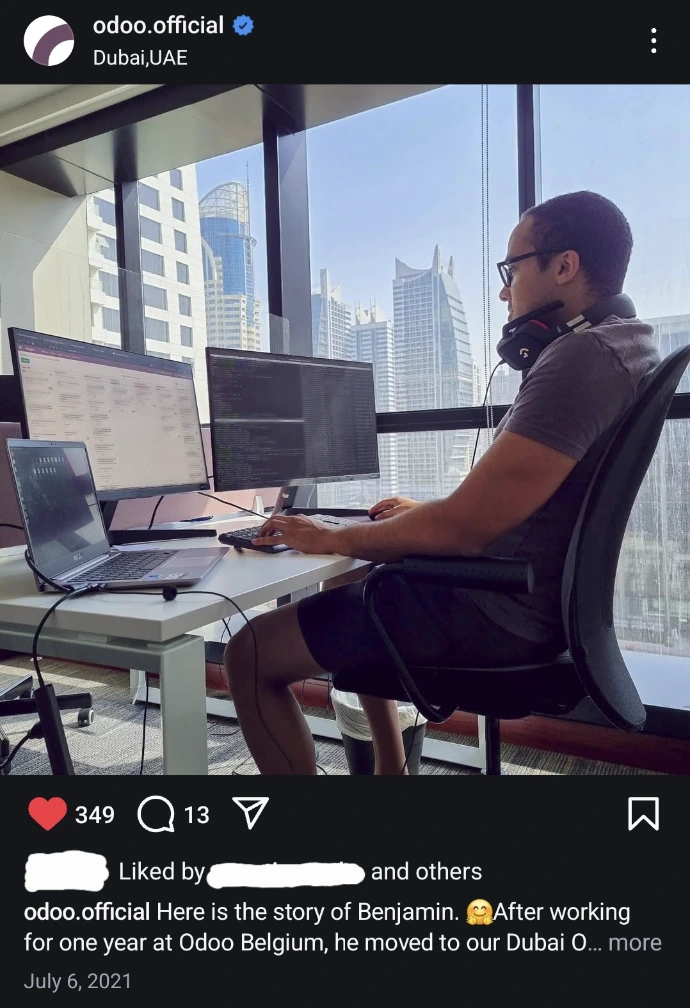
The people on the other end have run Odoo for a living
Skysize was founded by the former Head of Technical Consultancy at Odoo Dubai, alongside a co-founder who also worked at Odoo. When you ask why your workers are saturating, why longpolling stopped, or whether a module upgrade is safe on your version, you are asking people who answered those questions inside Odoo itself.
That is the part of a hosting platform you cannot see on a feature table, and the part you notice on the worst day.
What a comparison table doesn't show you
Hosting is easy to compare on the things that fit in a table: workers, storage, users. Those numbers describe a machine. They don't describe what happens on it.
What decides whether Odoo hosting was a good decision usually isn't visible at the moment you buy. Whether anyone noticed the instance had stopped before your staff did. Whether the backup had ever actually been restored. Whether the person who answered knew the problem already. How long you waited to find out.
Those are the parts we build, and the parts that cost you when they're missing. Compare providers on them, us included.
Who this is for
You run Odoo for your own business, one production system, perhaps a few, and it matters when it stops. You need it hosted somewhere specific, often in your own country. You'd rather it were run by people who have operated Odoo before, and you have no wish to become the person who does that.
If that's you, this page was written for you.
If you host Odoo for clients, the platform is only half the question; the arrangement behind it is the other half, and it isn't the one described on this page. Agencies running a portfolio work with us on different terms from a single production project.
Two things you get from us go into your own proposals rather than ours: an ISO 27001 certificate you can cite when your client's procurement asks, and a version of the platform that runs entirely inside a client's own network for the ones who can't use anyone's cloud.
Worth a conversation before you settle on a platform.
Partner programmeChoosing between the two
You want the server in your own cloud account but have never created one. They'll provision it for you from a cloud-provider API key; we need a server that already exists.
You don't want your hosting provider holding the keys to your whole machine, and you want the person who answers to know Odoo. We're there seven days a week. And the people answering are the engineers who ran Odoo's technical consultancy, so what you're describing has usually been seen before.
None of that shows up at signup. All of it shows up on the bad day.
Your server, our server, or entirely inside your own walls
Most platforms let you choose where the server sits. Skysize also lets you choose where the control plane sits, including entirely inside your own network, which is the one deployment a cloud-only panel cannot offer. Move between all three without changing platform, team or certification.
Odoo on Skysize infrastructure, run by us end to end. Nothing to provision, nothing to keep alive. The zero-setup option.
Managed Odoo hostingYour provider, your region, your machine. One command connects it, and deployments, staging, CI/CD and backups become ours. The option this page compares.
Bring your own serverOther platforms will manage a server on your premises, but the panel driving it still runs in their cloud. With Skysize On-Premise the control plane runs inside your infrastructure too, so no component sits outside your perimeter. Quote-based.
Skysize On-PremiseSame team, same certification, same way of running Odoo. Start where you are today and move when your requirements change.
Already running Odoo on Cloudpepper?
Then you already have what you need: a server you control and an Odoo database. Moving to Skysize means connecting that server to our control plane and bringing your databases across. We do the migration with you, on a call, and we test it before anything changes for your users.
Your Odoo stays Odoo. Your data stays Postgres. Nothing about your instance becomes proprietary by moving, which is also why leaving us later would be equally straightforward: your backups are downloadable at any time.
Once you're across, you can revoke the root key you gave your previous panel. That step is worth doing whether or not you move to us.
Talk to us about migratingFrequently asked
Your server stays yours.
Connect a server with one command and let the people who ran Odoo's technical consultancy handle deployments, staging, CI/CD and backups. Monitored, restarted automatically if Odoo stops, backed by people you can reach seven days a week, and without us ever holding the keys to your machine.
One-line install · We never hold your server keys · Monitored, with automatic recovery · Support seven days a week · ISO 27001 certified · Community & Enterprise · Trial available · No credit card to start